
Engagement Case Studies
Execution Creates Confidence.
Six representative engagements documented in full — the problem presented, the approach applied, the timeline, the scope delivered and the results. Client identities remain confidential unless authorised for release.
Case Study Index
- 01 · Accra, GhanaCommercial Construction & Procurement Engagement
- 02 · Greater Accra, GhanaInstitutional Equipment Supply Engagement
- 03 · Ashanti Region, GhanaAgricultural Mechanisation Support Engagement
- 04 · Western Region, GhanaIndustrial Supply & Specialist Sourcing Engagement
- 05 · Accra, GhanaEnterprise Technology Deployment Engagement
- 06 · Tema Port, GhanaRegional Trade & Logistics Engagement
Case Study 01 · Accra, Ghana
Commercial Construction & Procurement Engagement
PC Empire supported a commercial construction requirement through coordinated sourcing of building materials, equipment and associated logistical support, complementing physical project execution with a single accountable supply relationship.
- Client Profile
- Commercial property developer (identity withheld)
- Capabilities
- Construction · Procurement · Logistics

The Problem
- The developer was managing separate contracts for materials, plant hire and haulage, with no single party accountable for arrival on site.
- Material lead times were being discovered after award rather than during specification, creating repeated programme slippage.
- Site teams were absorbing commercial administration that belonged upstream of construction.
The Approach
01Requirement consolidation
Bills of quantity, plant needs and consumables were consolidated into one sourcing schedule mapped against the construction programme.
02Supplier evaluation
Local and imported options were evaluated on landed cost, lead time and technical compliance rather than unit price alone.
03Mobilisation & sequencing
Deliveries were sequenced to construction milestones so that storage, access and cash exposure stayed controlled.
04Delivery accountability
One PC Empire coordinator held responsibility from purchase order through gate receipt and documentation.
Timeline
Weeks 1–2
Requirement definition
Scope review, specification alignment and sourcing schedule.
Weeks 3–6
Sourcing & award
Supplier evaluation, commercial negotiation and order placement.
Weeks 6–10
Mobilisation
Plant mobilisation, first material tranches and site coordination.
Weeks 10–24
Delivery & support
Scheduled deliveries, replenishment and close-out documentation.
Scope Delivered
- Structural and finishing materials
- Earthworks and civil support
- Plant and equipment mobilisation
- Supplier and subcontract coordination
- Inland haulage and site delivery
- Documentation and delivery records
Results
1
Commercial interface replacing multiple providers
9
Supply categories coordinated under one schedule
100%
Deliveries recorded with traceable documentation
The client worked through one coordinated commercial relationship, with procurement decisions made against the construction programme instead of behind it.
Case Study 02 · Greater Accra, Ghana
Institutional Equipment Supply Engagement
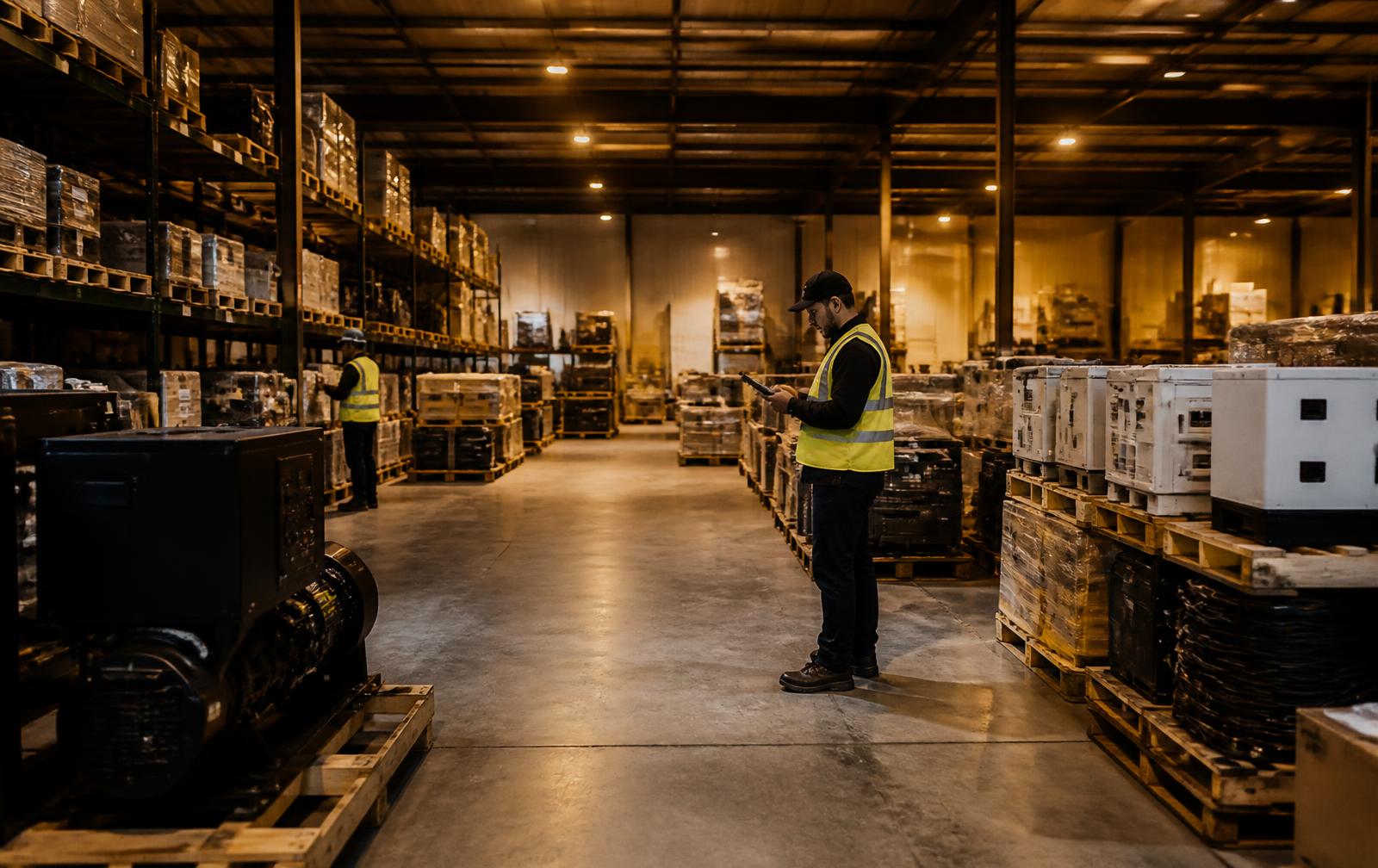
A multi-category requirement covering operational equipment, technology hardware and consumables was coordinated through structured sourcing, commercial evaluation and scheduled delivery, giving the institution a traceable procurement record.
- Client Profile
- National public-sector institution (identity withheld)
- Capabilities
- Procurement · Technology · Logistics
The Problem
- Requirements arrived from several departments in inconsistent formats, making comparison and consolidation difficult.
- Audit expectations demanded a documented trail from specification through evaluation to delivery.
- Some categories had no reliable local supply, requiring international sourcing within institutional timelines.
The Approach
01Specification normalisation
Departmental requests were translated into standard technical specifications with acceptable equivalents defined in advance.
02Structured sourcing
Local and international suppliers were invited against identical specifications to enable direct commercial comparison.
03Commercial evaluation
Offers were assessed on compliance, warranty, support and landed cost, with a written evaluation record for each category.
04Scheduled fulfilment
Deliveries were phased by department readiness, with receipt confirmation and asset documentation at each drop.
Timeline
Weeks 1–3
Requirement intake
Consolidation of departmental requirements and specifications.
Weeks 4–8
Sourcing
Supplier identification, quotation and technical clarification.
Weeks 9–11
Evaluation & award
Commercial evaluation, documentation and order placement.
Weeks 12–20
Delivery
Phased delivery, receipt confirmation and record hand-over.
Scope Delivered
- Operational equipment
- Enterprise computing and endpoints
- Communications equipment
- Technical consumables
- International sourcing
- Delivery scheduling and documentation
Results
7
Requirement categories consolidated into one process
3
Supply markets engaged against identical specifications
100%
Award decisions supported by written evaluation
Procurement became structured, traceable and defensible, with one organisation accountable for both commercial evaluation and physical delivery.
Case Study 03 · Ashanti Region, Ghana
Agricultural Mechanisation Support Engagement
Equipment, agricultural inputs and transport coordination were brought together for an expanding production operation, allowing several supply categories to be managed through one commercial relationship.
- Client Profile
- Regional agribusiness operator (identity withheld)
- Capabilities
- Agribusiness · Procurement · Logistics

The Problem
- Expansion required machinery, inputs and spares arriving in step with the planting calendar, not after it.
- Multiple operating locations created fragmented ordering and inconsistent delivery performance.
- Equipment decisions were being made without a view of parts availability or service support.
The Approach
01Operational review
Mechanisation needs were mapped against the production calendar and the capacity of each operating location.
02Equipment sourcing
Machinery was selected with parts availability, service support and operating conditions weighted alongside price.
03Input programme
Recurring agricultural inputs were placed on a scheduled supply programme instead of reactive ordering.
04Distribution
Transport was consolidated across locations to reduce cost per delivery and stabilise arrival dates.
Timeline
Weeks 1–2
Assessment
Production calendar review and mechanisation requirement definition.
Weeks 3–7
Sourcing
Machinery and input sourcing across local and import channels.
Weeks 8–14
Delivery & commissioning
Equipment delivery, commissioning support and spares provisioning.
Ongoing
Recurring supply
Scheduled input replenishment and logistics coordination.
Scope Delivered
- Agricultural machinery
- Implements and attachments
- Crop and livestock inputs
- Spares and consumables
- Multi-site distribution
- Recurring supply programme
Results
4
Supply categories under one commercial relationship
3
Operating locations served on a single schedule
Seasonal
Deliveries aligned to the production calendar
The operator gained one integrated sourcing and delivery partner across machinery, inputs and logistics, with supply timed to production rather than to paperwork.
Case Study 04 · Western Region, Ghana
Industrial Supply & Specialist Sourcing Engagement
Specialist components, PPE and technical consumables were sourced across international supply markets with freight, documentation and inland delivery coordinated as a single scope of work.
- Client Profile
- Industrial operator (identity withheld)
- Capabilities
- Industrial · International Trade · Logistics

The Problem
- Critical replacement components had no dependable local source, exposing operations to downtime risk.
- Import documentation and clearance were handled separately from purchasing, creating delays at port.
- Safety consumables were ordered reactively, with inconsistent specification compliance.
The Approach
01Criticality mapping
Components were classified by operational criticality and lead time to establish what required forward cover.
02International sourcing
Manufacturer and distributor channels were engaged across Europe, Asia and the Middle East against technical specification.
03Landed-cost planning
Incoterms, freight mode, duty and inland movement were priced at the point of sourcing, not after purchase.
04Single-scope logistics
Freight, documentation, clearance support and inland delivery were coordinated as one accountable scope.
Timeline
Weeks 1–2
Specification & mapping
Technical review and criticality classification.
Weeks 3–6
International sourcing
Supplier engagement, quotation and compliance verification.
Weeks 7–11
Freight & clearance
Consolidated freight, documentation and clearance support.
Weeks 11–13
Inland delivery
Inland movement, site receipt and stock hand-over.
Scope Delivered
- Specialist replacement components
- PPE and safety equipment
- Technical consumables
- International freight coordination
- Customs documentation support
- Inland transport to site
Results
3
International supply markets engaged
1
Accountable scope from source to site
Landed
Cost basis agreed before purchase, not after
The operator replaced a fragmented import chain with one accountable relationship covering sourcing, freight, clearance support and delivery.
Case Study 05 · Accra, Ghana
Enterprise Technology Deployment Engagement
Endpoints, network infrastructure, communications equipment and structured cabling were sourced and coordinated for an office expansion, positioning technology as part of a complete operational solution.
- Client Profile
- Multinational technology organisation (identity withheld)
- Capabilities
- Technology · Procurement · Deployment

The Problem
- Hardware, cabling and communications were being bought from unrelated vendors with no deployment owner.
- Fit-out dates were fixed, leaving no tolerance for staggered or incomplete arrivals.
- Equipment specifications had to satisfy a global standard while being sourced locally where possible.
The Approach
01Deployment schedule
A bill of technology was built against the fit-out programme, floor by floor, with dependencies made explicit.
02Standards-aligned sourcing
Local supply was used where it met the client's global standard; the balance was sourced internationally.
03Consolidated delivery
Hardware, passive infrastructure and accessories were consolidated so each floor received a complete set.
04Deployment support
Cabling, installation and commissioning resources were coordinated alongside the equipment supply.
Timeline
Weeks 1–2
Requirement & standards
Bill of technology and compliance alignment.
Weeks 3–6
Sourcing
Local and international sourcing against a single specification.
Weeks 7–9
Delivery
Consolidated floor-by-floor delivery.
Weeks 9–12
Deployment
Cabling, installation, commissioning and hand-over.
Scope Delivered
- Enterprise endpoints
- Network infrastructure
- Communications systems
- Structured cabling
- Software and licensing support
- Installation and commissioning coordination
Results
1
Bill of technology across hardware, passive and software
0
Separate vendor interfaces left with the client
Floor-by-floor
Complete sets delivered to the fit-out programme
Technology arrived as a complete operational solution tied to the fit-out programme, rather than a series of standalone product purchases.
Case Study 06 · Tema Port, Ghana
Regional Trade & Logistics Engagement
International sourcing was combined with freight coordination, clearance support and inland distribution, connecting an overseas supply market with a Ghanaian operating location under one accountable relationship.
- Client Profile
- International manufacturer (identity withheld)
- Capabilities
- International Trade · Logistics · Procurement

The Problem
- The manufacturer had product demand in Ghana but no local commercial or logistics presence.
- Documentation errors upstream were generating avoidable delay and cost at port.
- Inland distribution was unmanaged once containers cleared.
The Approach
01Corridor design
Origin, freight mode, port of entry and inland routing were designed as one corridor with defined hand-over points.
02Documentation discipline
Commercial and shipping documentation was prepared and checked before departure to protect clearance timelines.
03Clearance support
Clearance was coordinated with the client's obligations and the port's requirements held in one view.
04Inland distribution
Warehousing and onward distribution were coordinated to the final operating locations with delivery confirmation.
Timeline
Weeks 1–3
Corridor setup
Routing design, documentation standards and cost basis.
Weeks 3–5
Origin sourcing & booking
Supplier coordination and freight booking.
Weeks 5–10
Transit & clearance
Ocean transit, documentation and clearance support.
Weeks 10–12
Distribution
Warehousing, inland movement and delivery confirmation.
Scope Delivered
- International sourcing
- Freight booking and coordination
- Customs documentation support
- Warehousing coordination
- Inland distribution
- Landed-cost reporting
Results
1
Corridor from overseas source to Ghanaian site
2
Hand-over points instead of an unmanaged chain
Pre-cleared
Documentation prepared before departure
One accountable relationship now spans sourcing, freight, clearance support and inland delivery, giving the manufacturer a working route into the market.
Proof & Credentials
Positioning Is Only Credible When It Is Measurable.
Delivery indicators, corporate registrations and quantified engagement outcomes — the basis on which procurement teams can qualify PC Empire.
07
Integrated capability lines
Coordinated under one commercial structure.
05
Global sourcing regions
Africa, Europe, North America, Middle East, Asia.
40+
Supply categories
From civil materials to enterprise technology.
06
Methodology stages
Applied to every engagement, regardless of size.
100%
Documented awards
Written evaluation behind every commercial decision.
01
Accountable interface
One coordinator across the whole requirement.
Registrations & Standing
Registered Limited Company
PC Empire Limited is incorporated in Ghana and operates as a registered limited liability company.
Statutory Tax Registration
Registered for statutory tax obligations, enabling compliant institutional and public-sector invoicing.
Public-Sector Tender Capability
Structured to respond to institutional tenders with the documentation and traceability those processes require.
Import & Export Documentation
Experienced in commercial and shipping documentation across Ghanaian ports of entry.
Supplier & Manufacturer Relationships
Direct engagement with manufacturers, distributors and specialist suppliers across five sourcing regions.
Insurance & Liability Cover
Commercial cover is confirmed per engagement in line with client and project requirements.
Quantified Outcomes
Multiple providers reduced to one commercial relationship
Vendor interfaces consolidated
Commercial construction and procurement engagement, Accra.
7 departmental categories run through one sourcing process
Requirement categories unified
Institutional equipment supply engagement, Greater Accra.
4 categories delivered on the seasonal calendar across 3 sites
Supply aligned to production
Agricultural mechanisation support engagement, Ashanti Region.
3 international markets served through 1 accountable scope
Import chain simplified
Industrial supply and specialist sourcing engagement, Western Region.
Engagement profiles are anonymised. Client identities, contract values and commercial terms are released only with written authorisation.
From Requirement to Delivery.
Engagement profiles are anonymised. Client identities, contract values and commercial terms are released only with written authorisation.